|
|
| (11 intermediate revisions by the same user not shown) |
| Line 1: |
Line 1: |
| | [[Category:Engine]] | | [[Category:Engine]] |
| − | '''Q''': Are there preferred brands of oil for motorcycle use?
| + | ==Are there preferred brands of oil for motorcycle use?== |
| | | | |
| − | '''A''': Not really. The two most important rules when it comes to oil are: 1. Make sure there is enough in the engine. 2. Change it regularly. What you change it with or what specific change interval you use are secondary. Pick a quality, name-brand oil with the correct viscosity for your climate (5w40 up to 20w50 - see your owners manual). It can be for either autos or motos.
| + | ====Standard oil==== |
| | | | |
| − | Keep in mind that nearly everyone who has run motorcycles for a long time uses [[Why Synthetic Oil?|synthetic oil]]. But, until you hit the [[When can I change to synthetic oil?|3500-5000 mile mark]], use a quality brand and change it more frequently than the manual calls for.
| + | Not really. The two most important rules when it comes to oil are: 1. Make sure there is enough in the engine. 2. Change it regularly. What you change it with or what specific change interval you use are secondary. Pick a quality, name-brand oil with the correct viscosity for your climate (5W-40 up to 20W-50; see your owner's manual). It can be for either autos or motos. |
| | | | |
| − | There is a club favorite when it comes to synthetic oil: [http://www.shell.com/home/Framework?siteId=rotella-en&FC2=/rotella-en/html/iwgen/products/zzz_lhn.html&FC3=/rotella-en/html/iwgen/products/t6_detail.html Shell Rotella T] Synthetic 5W-40. It's made for turbo-diesel trucks, but it works great in the Ninjette. You can find it at Wal-Mart, truck supply stores (Flying J or other truck stops) and tractor/farm stores (Tractor Supply Co). There are a couple different Shell oils with the Rotella brand. Get the full synthetic, not the synthetic blend. Be sure to [[When can I change to synthetic oil?|do your research]] before you switch to synthetic.
| + | Keep in mind that nearly everyone who has run motorcycles for a long time uses [[When can I change to synthetic oil?|synthetic oil]], but you shouldn't use it until the engine is broken in. Until then, use a quality brand and change it more frequently than the manual calls for. |
| | | | |
| − | Want to read more about oil? See [[Informative oil links]]
| + | ====Synthetic oil==== |
| | | | |
| − | '''Q''':Which oils should not be used? | + | There is a club favorite when it comes to synthetic oil: [http://www.shell.com/home/Framework?siteId=rotella-en&FC2=/rotella-en/html/iwgen/products/zzz_lhn.html&FC3=/rotella-en/html/iwgen/products/t6_detail.html Shell Rotella T6] Full Synthetic 5W-40. It's made for turbo-diesel trucks, but it works great in the Ninjette. You can find it at Wal-Mart, truck supply stores (Flying J or other truck stops) and tractor/farm stores (Tractor Supply Co). There are a couple different Shell oils with the Rotella brand. Get the full synthetic, not the synthetic blend. |
| | | | |
| − | '''A''': You've probably had friends tell you that you have to run motorcycle-specific oil in your bike. You've likely also seen that $10-a-litre stuff at the dealer's. Riders usually use these oils because they are worried that non-moto oil will be detrimental to their [[Wet clutch Q & A|wet clutch]].
| + | Rotella T6 is a fully synthetic oil with a very high film strength, which means it doesn't dry off of metal parts easily, and it lubricates well even during periods of reduced pressure and reduced flow. This will help reduce wear on your engine if/when you are forced to do lots of idling before the engine has had a chance to warm up. |
| | | | |
| − | What they are really worried about is oil that is labeled [http://en.wikipedia.org/wiki/Motorcycle_oil#Clutch_lubrication Energy Conserving]. Energy conserving oils are made to be more slippery than conventional oils, and your clutch may not like this fact. However, there is an [http://forums.ninja250.org/viewtopic.php?t=56989 ongoing discussion] on this board concerning this subject. One of our motorcycle mechanics has 100,000 miles of riding on energy-conserving oil. A couple of our daily riders used it for over a year without any negative effects. But we're going to assume that, if you are reading this, you are a relatively new rider. As such, we recommend that you play it safe and stick to the non-energy-conserving type until you get a little more experience and can join in the fights about oil, too. | + | Rotella T6 is a 5W "cold" number oil, so it will flow easier when cold, and since it's a full synthetic, its cold flow characteristics are excellent to begin with. Also, if you review the [[Oil Change Frequency|oil requirements]] for the EX250, the oil's "hot" number is supposed to be either 40W or 50W to properly protect the engine at its full operating temp. Most 5W-XX oils are 5W-20 or 5W-30. With Rotella's 40W "hot" weight, you won't be sacrificing its ability to protect the engine when it is fully warmed up. |
| | + | |
| | + | |
| | + | To find out more about why oil made for diesel trucks is good for your motorcycle, read the Commercial (Diesel) Oil section of [http://www.calsci.com/motorcycleinfo/Oils1.html All About Oil]. |
| | + | |
| | + | ==Which oils should not be used?== |
| | + | |
| | + | You've probably had friends tell you that you have to run motorcycle-specific oil in your bike. You've likely also seen that $12-a-quart stuff at the dealer's. Riders usually use these oils because they are worried that non-moto oil will be detrimental to their [[Wet clutch Q & A|wet clutch]]. |
| | + | |
| | + | What they are really worried about is oil that is labeled [http://en.wikipedia.org/wiki/Motorcycle_oil#Clutch_lubrication Energy Conserving]. Energy conserving (EC) oils are made to be more slippery than conventional oils, which may cause the clutch to slip on some motorcycles. If you put EC oil in your bike and do feel clutch slippage, just change the oil to non-EC; that should make the problem go away. Note that newer EC oils are labeled 'resource conserving'. |
| | + | |
| | + | There is an [http://forums.ninja250.org/viewtopic.php?t=56989 ongoing discussion] on this board concerning this subject. One of our motorcycle mechanics has 100,000 miles of riding on EC oil. A couple of our daily riders used it for over a year without any negative effects. But we're going to assume that, if you are reading this, you are a relatively new rider. As such, we recommend that you play it safe and stick to the non-EC type. |
| | | | |
| | That doesn't mean you have to use oil that is labeled for motorcycles, though. When you're out buying oil, look on the back of the bottle for the [http://www.api.org/aboutoilgas/motoroil/api-quality-marks.cfm American Petroleum Institute's] "donut". Oil that is energy conserving will say so in the bottom half, as in the first two examples here: | | That doesn't mean you have to use oil that is labeled for motorcycles, though. When you're out buying oil, look on the back of the bottle for the [http://www.api.org/aboutoilgas/motoroil/api-quality-marks.cfm American Petroleum Institute's] "donut". Oil that is energy conserving will say so in the bottom half, as in the first two examples here: |
| Line 23: |
Line 34: |
| | [[Image:15W40_donut.jpeg|100px]] | | [[Image:15W40_donut.jpeg|100px]] |
| | | | |
| − | Nearly all energy conserving oils are 10w-30 or lighter. As the recommended weights for the EX250 are heavier than that, this is not really much of an issue, anyway. Pick the weight you want to run, keep the level full, and you're good to go until the next oil change. | + | Nearly all EC oils are 10w-30 or lighter. As the recommended weights for the EX250 are heavier than that, this is not really much of an issue, anyway. Pick the weight you want to run, keep the level full, and you're good to go until the next oil change. |
| | + | |
| | + | ==Want to read more about oil?== |
| | + | |
| | + | See [[Informative oil links]] |
Latest revision as of 21:43, 15 April 2012
Are there preferred brands of oil for motorcycle use?
Standard oil
Not really. The two most important rules when it comes to oil are: 1. Make sure there is enough in the engine. 2. Change it regularly. What you change it with or what specific change interval you use are secondary. Pick a quality, name-brand oil with the correct viscosity for your climate (5W-40 up to 20W-50; see your owner's manual). It can be for either autos or motos.
Keep in mind that nearly everyone who has run motorcycles for a long time uses synthetic oil, but you shouldn't use it until the engine is broken in. Until then, use a quality brand and change it more frequently than the manual calls for.
Synthetic oil
There is a club favorite when it comes to synthetic oil: Shell Rotella T6 Full Synthetic 5W-40. It's made for turbo-diesel trucks, but it works great in the Ninjette. You can find it at Wal-Mart, truck supply stores (Flying J or other truck stops) and tractor/farm stores (Tractor Supply Co). There are a couple different Shell oils with the Rotella brand. Get the full synthetic, not the synthetic blend.
Rotella T6 is a fully synthetic oil with a very high film strength, which means it doesn't dry off of metal parts easily, and it lubricates well even during periods of reduced pressure and reduced flow. This will help reduce wear on your engine if/when you are forced to do lots of idling before the engine has had a chance to warm up.
Rotella T6 is a 5W "cold" number oil, so it will flow easier when cold, and since it's a full synthetic, its cold flow characteristics are excellent to begin with. Also, if you review the oil requirements for the EX250, the oil's "hot" number is supposed to be either 40W or 50W to properly protect the engine at its full operating temp. Most 5W-XX oils are 5W-20 or 5W-30. With Rotella's 40W "hot" weight, you won't be sacrificing its ability to protect the engine when it is fully warmed up.
To find out more about why oil made for diesel trucks is good for your motorcycle, read the Commercial (Diesel) Oil section of All About Oil.
Which oils should not be used?
You've probably had friends tell you that you have to run motorcycle-specific oil in your bike. You've likely also seen that $12-a-quart stuff at the dealer's. Riders usually use these oils because they are worried that non-moto oil will be detrimental to their wet clutch.
What they are really worried about is oil that is labeled Energy Conserving. Energy conserving (EC) oils are made to be more slippery than conventional oils, which may cause the clutch to slip on some motorcycles. If you put EC oil in your bike and do feel clutch slippage, just change the oil to non-EC; that should make the problem go away. Note that newer EC oils are labeled 'resource conserving'.
There is an ongoing discussion on this board concerning this subject. One of our motorcycle mechanics has 100,000 miles of riding on EC oil. A couple of our daily riders used it for over a year without any negative effects. But we're going to assume that, if you are reading this, you are a relatively new rider. As such, we recommend that you play it safe and stick to the non-EC type.
That doesn't mean you have to use oil that is labeled for motorcycles, though. When you're out buying oil, look on the back of the bottle for the American Petroleum Institute's "donut". Oil that is energy conserving will say so in the bottom half, as in the first two examples here:
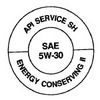

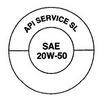
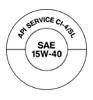
Nearly all EC oils are 10w-30 or lighter. As the recommended weights for the EX250 are heavier than that, this is not really much of an issue, anyway. Pick the weight you want to run, keep the level full, and you're good to go until the next oil change.
Want to read more about oil?
See Informative oil links


